新古典主義「古代の理想美が蘇る、秩序と理性の芸術革命」(Neoclassicism "The Artistic Revolution of Order and Reason: Revival of Ancient Ideal Beauty")
概要Overview
新古典主義は、18世紀後半から19世紀初頭にかけて広まった芸術運動で、古代ギリシャやローマの美学を現代に復活させることを目指しました。
Neoclassicism was an artistic movement that spread from the late 18th to early 19th centuries, aiming to revive the aesthetics of ancient Greece and Rome in the modern era.
理性、秩序、普遍的な美を重視し、英雄的な行為や倫理的なテーマが多く描かれたのが特徴です。
It emphasized reason, order, and universal beauty, often depicting heroic acts and ethical themes.
この記事では、新古典主義の歴史的背景、主要な特徴、代表的な作品とその分析、そしてこの時代の美術が後世に与えた影響について詳しく解説します。
This article provides a detailed explanation of Neoclassicism's historical background, main characteristics, representative works and their analysis, and the influence this era's art had on subsequent generations.
古代の美学が現代に甦るAncient Aesthetics Reborn in the Modern Era
新古典主義は、18世紀後半から19世紀初頭にかけてヨーロッパで広まった芸術運動です。
Neoclassicism was an artistic movement that spread across Europe from the late 18th to early 19th centuries.
この時代の美術は、古代ギリシャやローマの美学を復活させることを目指し、理性と秩序を重視しました。
The art of this era aimed to revive the aesthetics of ancient Greece and Rome, emphasizing reason and order.
バロックやロココの装飾的なスタイルに対する反動として生まれた新古典主義は、清潔で明確な線、落ち着いた色彩、理想化された人物像などの特徴を持ち、厳粛でシンプルなスタイルを追求しました。
Born as a reaction to the decorative styles of Baroque and Rococo, Neoclassicism pursued a solemn and simple style characterized by clean, clear lines, subdued colors, and idealized figures.
啓蒙思想と古代遺跡の発見Enlightenment Thought and the Discovery of Ancient Ruins
新古典主義が生まれた時代は、啓蒙思想が広まり、理性や科学が重視される時期でした。
The era that gave birth to Neoclassicism was a time when Enlightenment thought spread, and reason and science were highly valued.
フランス革命やナポレオン戦争などの政治的・社会的変革も、この時代の芸術に大きな影響を与えました。
Political and social upheavals such as the French Revolution and the Napoleonic Wars also greatly influenced the art of this period.
18世紀にはポンペイやヘルクラネウムの古代遺跡が発掘され、これが古代ローマやギリシャへの関心を高め、新古典主義の発展に大きな影響を与えました。
The excavation of ancient ruins at Pompeii and Herculaneum in the 18th century heightened interest in ancient Rome and Greece, significantly influencing the development of Neoclassicism.
また、フランス革命後の共和制志向も、古代の理想を模範とする新古典主義の発展に寄与しました。
Moreover, the republican tendencies following the French Revolution contributed to the development of Neoclassicism, which took ancient ideals as its model.
理想化された美と倫理的テーマIdealized Beauty and Ethical Themes
新古典主義の美術様式には、いくつかの顕著な特徴があります。
Neoclassical art style has several notable characteristics.
シンプルさと対称性を重視し、理想化された人物像が多く描かれました。
It emphasized simplicity and symmetry, often depicting idealized figures.
倫理的・道徳的なテーマが好まれ、古代の英雄や神話的な場面がよく描かれています。
Ethical and moral themes were favored, with scenes of ancient heroes and mythological events frequently portrayed.
緻密なデッサン技術を用い、はっきりとした輪郭や均衡の取れた構図が重視されました。
Meticulous drawing techniques were employed, with clear outlines and balanced compositions emphasized.
色彩は落ち着いたものが多く、派手な色使いは避けられました。
Colors were often subdued, avoiding flashy use of color.
油彩画が主流で、古代の彫刻や建築物からインスピレーションを受けたデザインが多く見られます。
Oil paintings were predominant, with designs often inspired by ancient sculptures and architectural structures.
理想美の結晶Crystallization of Ideal Beauty
新古典主義を代表する作品には、以下のようなものがあります。
Representative works of Neoclassicism include:
- ジャック=ルイ・ダヴィッド「ホラティウス兄弟の誓い」(1784-1785年)
Jacques-Louis David's "Oath of the Horatii" (1784-1785)
- ジャック=ルイ・ダヴィッド「ナポレオンの戴冠式」(1805-1807年)
Jacques-Louis David's "The Coronation of Napoleon" (1805-1807)
- ジャック=ルイ・ダヴィッド「アルプスを越えるナポレオン」(1801年)
Jacques-Louis David's "Napoleon Crossing the Alps" (1801)
- ドミニク・アングル「グランド・オダリスク」(1814年)
Jean-Auguste-Dominique Ingres' "Grande Odalisque" (1814)
「ホラティウス兄弟の誓い」に見る新古典主義の精神The Spirit of Neoclassicism in "Oath of the Horatii"
ジャック=ルイ・ダヴィッドの「ホラティウス兄弟の誓い」は、新古典主義を代表する作品の一つです。
Jacques-Louis David's "Oath of the Horatii" is one of the representative works of Neoclassicism.
1784-1785年に制作されたこの作品は、古代ローマの物語を題材にしています。
Created in 1784-1785, this work takes its subject from an ancient Roman story.
ホラティウス兄弟が国家のために戦うことを誓う場面を描いており、新古典主義の理想である倫理的・道徳的な価値観を強調しています。
Depicting the scene where the Horatii brothers swear to fight for their country, it emphasizes the ethical and moral values that were the ideals of Neoclassicism.
緻密なデッサンと明確な輪郭線、対称的な構図が特徴的で、色彩は落ち着いており、人物の表情や姿勢が理想化されています。
It is characterized by meticulous drawing and clear outlines, with a symmetrical composition. The colors are subdued, and the expressions and postures of the figures are idealized.
この作品は、フランス革命前夜の社会的・政治的な背景とも結びついており、当時の人々の愛国心や自己犠牲の精神を象徴的に表現しています。
This work is also connected to the social and political background on the eve of the French Revolution, symbolically expressing the patriotism and spirit of self-sacrifice of the people of that time.
芸術の潮流を変えた革命A Revolution that Changed the Tide of Art
新古典主義は、19世紀のアカデミズム美術に大きな影響を与えました。
Neoclassicism had a significant influence on academic art in the 19th century.
理性と秩序を重視する美学は、後の芸術運動にも影響を及ぼし、現代でも新古典主義の作品は高く評価されており、美術史における重要な位置を占めています。
The aesthetics that emphasized reason and order influenced later artistic movements, and Neoclassical works are still highly valued today, occupying an important position in art history.
古代の美学を再評価する動きは、現代の芸術やデザインにも影響を与えており、その重要性は今なお失われていません。
The movement to reevaluate ancient aesthetics continues to influence modern art and design, and its importance remains undiminished.
時代が生んだ新たな美学A New Aesthetic Born of the Times
新古典主義と古典主義には、いくつかの重要な違いがあります。
There are several important differences between Neoclassicism and Classicism.
古典主義が17世紀から18世紀前半に主に発展したのに対し、新古典主義は18世紀後半から19世紀初頭にかけて広まりました。
While Classicism mainly developed from the 17th to the early 18th century, Neoclassicism spread from the late 18th to early 19th century.
古典主義がより自由で自然体の美を重視したのに対し、新古典主義は形式と規則を重視し、より厳格で高尚な様式を追求しました。
While Classicism emphasized a more free and natural beauty, Neoclassicism emphasized form and rules, pursuing a more strict and noble style.
また、新古典主義は古代ギリシャやローマの美学により強く影響を受け、ヨーロッパ全土に広がりました。
Moreover, Neoclassicism was more strongly influenced by the aesthetics of ancient Greece and Rome and spread throughout Europe.
理性と感情の対立The Opposition of Reason and Emotion
新古典主義とロマン主義は、同時期に存在しながらも対照的な芸術観を持っていました。
Neoclassicism and Romanticism existed simultaneously but had contrasting artistic views.
新古典主義が理性、秩序、普遍的な美を重視したのに対し、ロマン主義は感情、個性、自然への崇拝を重視しました。
While Neoclassicism emphasized reason, order, and universal beauty, Romanticism emphasized emotion, individuality, and worship of nature.
新古典主義が古代の理想や英雄的な行為を描いたのに対し、ロマン主義は個人の感情や想像力を尊重し、自然や中世の騎士道を題材にすることが多かったのです。
While Neoclassicism depicted ancient ideals and heroic acts, Romanticism respected individual emotions and imagination, often using nature and medieval chivalry as subjects.
20世紀の巨匠が見出した古典の魅力A 20th Century Master Discovers the Charm of Classics
興味深いことに、20世紀の巨匠パブロ・ピカソも1920年代に新古典主義の特徴を模倣した作品を制作しています。
Interestingly, Pablo Picasso, a 20th century master, also created works that imitated Neoclassical characteristics in the 1920s.
ピカソがこのような作風を試みた理由としては、芸術的探求、時代の影響、技術の向上、多様性の追求、古典への敬意などが考えられます。
Reasons for Picasso's attempt at this style may include artistic exploration, influence of the times, technical improvement, pursuit of diversity, and respect for the classics.
この時期のピカソの作品は、彼の芸術的な多様性と探求心を示す重要な例となっています。
The works of Picasso from this period serve as important examples of his artistic diversity and spirit of exploration.
古代の美学が現代に残したレガシーThe Legacy of Ancient Aesthetics in the Modern Era
新古典主義は、古代の理想美を再現し、理性と秩序を重視する芸術運動として、18世紀後半から19世紀初頭にかけて発展しました。
Neoclassicism developed from the late 18th to early 19th centuries as an artistic movement that reproduced the ideal beauty of antiquity and emphasized reason and order.
バロックやロココの装飾性に対する反動として生まれたこの運動は、シンプルさと対称性、倫理的・道徳的なテーマ、緻密なデッサン技術などを特徴とし、後の芸術運動に大きな影響を与えました。
Born as a reaction to the decorativeness of Baroque and Rococo, this movement was characterized by simplicity and symmetry, ethical and moral themes, and meticulous drawing techniques, greatly influencing later artistic movements.
ジャック=ルイ・ダヴィッドやドミニク・アングルといった画家たちによって代表される新古典主義は、現代でもその重要性が再確認され、美術史において重要な役割を果たしています。
Represented by painters such as Jacques-Louis David and Jean-Auguste-Dominique Ingres, Neoclassicism continues to have its importance reaffirmed in modern times, playing a crucial role in art history.
古典主義やロマン主義との比較、さらにはピカソの作品にも見られる影響を通じて、新古典主義の持つ普遍的な魅力と芸術的価値が浮き彫りになるのです。
Through comparisons with Classicism and Romanticism, and even the influence seen in Picasso's works, the universal appeal and artistic value of Neoclassicism are highlighted.
ロココ美術「優雅と快楽の時代を彩る絵画」(Rococo Art "Paintings That Adorned the Age of Elegance and Pleasure")
概要Overview
ロココ美術は、18世紀フランスを中心に花開いた優美で繊細な芸術様式です。
Rococo art is an elegant and delicate artistic style that flourished primarily in 18th-century France.
軽やかな曲線と柔らかな色彩が特徴的で、貴族社会の享楽的な生活を反映しています。
Characterized by light curves and soft colors, it reflects the hedonistic lifestyle of aristocratic society.
この記事では、ロココ美術の歴史的背景や主な特徴、代表的な作品について詳しく解説します。
This article will explore the historical background, main characteristics, and representative works of Rococo art.
また、ロココ絵画がどのように宮廷文化に影響を与え、後世の美術にどのような影響を及ぼしたかについても触れていきます。
We will also discuss how Rococo paintings influenced court culture and their impact on later art.
華麗なる宮廷文化の開花The Blossoming of Splendid Court Culture
ロココ美術は、18世紀初頭から中期にかけて、主にフランスで発展した芸術様式です。
Rococo art is an artistic style that developed mainly in France from the early to mid-18th century.
約1700年から1780年の間に栄え、ヨーロッパ各国にも広がりました。
It flourished between about 1700 and 1780 and spread to other European countries.
バロック様式から派生したこの様式は、軽やかで優美なデザインが特徴的です。
Derived from the Baroque style, this style is characterized by light and elegant designs.
享楽と自由の時代背景The Background of an Era of Pleasure and Freedom
ロココ様式は、ルイ14世の死後、ルイ15世およびルイ16世の治世を通じて発展しました。
The Rococo style developed during the reigns of Louis XV and Louis XVI, after the death of Louis XIV.
この時代、バロックの厳格さから解放され、より自由で感覚的、個人的な喜びを重視する文化が花開きました。
During this period, freed from the strictness of the Baroque, a culture emerged that emphasized more freedom, sensuality, and personal pleasure.
特にフランス宮廷を中心に、贅沢と優雅さを競うような社会気運がロココ様式の発展を促しました。
Particularly centered on the French court, a social climate that competed in luxury and elegance promoted the development of the Rococo style.
ポンパドゥール夫人の影響も大きく、彼女が主催したサロンなどからロココ美術は広がっていきました。
The influence of Madame de Pompadour was also significant, and Rococo art spread from the salons she hosted.
繊細さと優美さの結晶The Crystallization of Delicacy and Elegance
ロココ美術の主な特徴は、以下の点に集約されます。
The main characteristics of Rococo art can be summarized in the following points:
- 曲線的なデザイン:直線よりも曲線が多用され、全体的に柔らかく流れるような構図が特徴的です。
Curvilinear design: Curves are used more than straight lines, characterized by an overall soft, flowing composition. - 柔らかな色彩:パステルカラーが多用され、淡いピンク、ブルー、クリーム色などの柔らかい色合いが作品全体に優美な雰囲気を与えています。
Soft colors: Pastel colors are often used, with soft shades of pink, blue, and cream giving an elegant atmosphere to the entire work. - 繊細な筆致:細部まで丁寧に描かれ、細かい装飾や自然の要素が緻密に描写されています。
Delicate brushwork: Detailed and carefully painted, with intricate decorations and natural elements depicted meticulously. - 自然の要素:植物、花、鳥、風景などが頻繁に描かれ、自然の美しさを称賛する要素が強調されています。
Natural elements: Plants, flowers, birds, and landscapes are frequently depicted, emphasizing elements that praise the beauty of nature. - 官能的で優雅な雰囲気:愛や楽しみをテーマにした作品が多く、軽やかで快楽的な雰囲気が漂っています。
Sensual and elegant atmosphere: Many works feature themes of love and pleasure, with a light and hedonistic atmosphere. - アシンメトリーなデザイン:非対称な構図が多用され、より自然で生き生きとした印象を与えています。
Asymmetrical design: Asymmetrical compositions are often used, giving a more natural and lively impression.
魅惑の名作たちCaptivating Masterpieces
ロココ美術の代表的な作品には以下のようなものがあります。
Representative works of Rococo art include the following:
- 「ぶらんこ」(ジャン・オノレ・フラゴナール、1767年頃):優雅さと官能性が漂う、ロココを代表する情景画。
"The Swing" of Jean-Honoré Fragonard (c. 1767): A scene representing elegance and sensuality, emblematic of Rococo.
- 「シテール島の巡礼」(アントワーヌ・ヴァトー、1717年):愛の島への旅を描き、ロココの夢想的な雰囲気を表現。
"Pilgrimage to Cythera" of Antoine Watteau (1717): Depicting a journey to the island of love, expressing the dreamy atmosphere of Rococo.
- 「ポンパドゥール夫人の肖像」(フランソワ・ブーシェ、1756年):ルイ15世の影響力ある愛人を描き、ロココの美と洗練の理想を体現。
"Portrait of Madame de Pompadour" of François Boucher (1756): A portrayal of the influential mistress of Louis XV, embodying Rococo's ideals of beauty and refinement.
優雅さの極み「ぶらんこ」の魅力The Epitome of Elegance: The Charm of "The Swing"
フラゴナールの「ぶらんこ」は、ロココ絵画の特徴を見事に体現した作品です。
Fragonard's "The Swing" is a work that perfectly embodies the characteristics of Rococo painting.
若い女性が優雅にぶらんこに乗る姿が、柔らかな筆致と明るい色彩で描かれています。
A young woman elegantly riding a swing is depicted with soft brushstrokes and bright colors.
背景には豊かな緑の庭園が広がり、ロココ絵画の自然への傾倒が見られます。
The background shows a lush green garden, reflecting Rococo painting's inclination towards nature.
ぶらんこに乗る女性と、彼女を見上げる男性の姿には、ロココ絵画に特徴的な恋愛や快楽のテーマが表現されています。
The woman on the swing and the man looking up at her express the themes of love and pleasure characteristic of Rococo painting.
ぶらんこの動きや女性のドレスの揺れが、画面全体に軽やかさと動きを与えており、ロココ絵画の特徴的な要素となっています。
The movement of the swing and the flutter of the woman's dress give lightness and movement to the entire canvas, becoming a characteristic element of Rococo painting.
また、画面の構図は完全に対称ではなく、ロココ特有の非対称性が見られます。
Also, the composition of the picture is not completely symmetrical, showing the asymmetry typical of Rococo.
これにより、より自然で生き生きとした印象を与えています。
This gives a more natural and lively impression.
宮廷文化への華麗なる影響Splendid Influence on Court Culture
ロココ絵画は、18世紀のフランス宮廷文化に多大な影響を与えました。
Rococo painting had a significant influence on 18th-century French court culture.
宮廷の装飾やインテリアに大きな影響を与え、フランス王妃マリー・アントワネットは、ロココ調のデザインや装飾を好んで取り入れました。
It greatly influenced court decorations and interiors, with French Queen Marie Antoinette favoring Rococo-style designs and decorations.
また、貴族たちの社交文化にも影響を与え、サロンや宴会などの社交場では、ロココ様式の絵画が飾られ、優雅で軽やかな雰囲気が楽しまれました。
It also influenced the social culture of the aristocracy, with Rococo-style paintings decorating salons and banquets, creating an elegant and light atmosphere.
さらに、ロココ時代は「女性の時代」とも呼ばれ、女性のサロン文化が発展しました。
Furthermore, the Rococo era was called the "age of women," and women's salon culture developed.
ポンパドゥール夫人やデュ・バリー夫人などの影響力のある女性たちが、ロココ美術を通じて文化的なリーダーシップを発揮し、女性の社会的地位が向上しました。
Influential women such as Madame de Pompadour and Madame du Barry exerted cultural leadership through Rococo art, elevating the social status of women.
美の継承と現代への影響The Inheritance of Beauty and Its Influence on the Modern Era
ロココ美術は、その後のヨーロッパ美術に大きな影響を与えました。
Rococo art had a significant influence on subsequent European art.
特に、装飾芸術や室内装飾の分野では、ロココの影響が長く続きました。
Particularly in the fields of decorative arts and interior decoration, the influence of Rococo continued for a long time.
現代においても、ロココ美術の優雅さや繊細さは高く評価されており、ファッションやインテリアデザインなどの分野に影響を与え続けています。
Even in modern times, the elegance and delicacy of Rococo art are highly valued and continue to influence fields such as fashion and interior design.
また、美術史研究の分野でも、ロココ美術は18世紀ヨーロッパの社会や文化を理解する上で重要な位置を占めています。
In the field of art history research, Rococo art also occupies an important position in understanding 18th-century European society and culture.
優美なる時代の遺産The Legacy of an Elegant Era
ロココ美術は、18世紀フランスの宮廷文化を象徴する芸術様式として、今なお多くの人々を魅了し続けています。
Rococo art continues to fascinate many people as an artistic style symbolizing 18th-century French court culture.
その優美で繊細な表現は、当時の貴族社会の享楽的な生活を映し出すとともに、人々の美意識や価値観にも大きな影響を与えました。
Its elegant and delicate expression not only reflects the hedonistic life of the aristocratic society of the time but also had a significant influence on people's aesthetic sense and values.
ロココ美術の研究は、単に芸術作品を鑑賞するだけでなく、18世紀ヨーロッパの社会や文化、そして人々の生活や思想を深く理解することにつながります。
The study of Rococo art leads not only to the appreciation of artworks but also to a deep understanding of 18th-century European society, culture, and people's lives and thoughts.
優雅さと快楽を追求したこの時代の芸術は、現代に生きる私たちにも、美しさや喜びの本質について考えるきっかけを与えてくれるのです。
The art of this era, which pursued elegance and pleasure, gives us, living in the modern age, an opportunity to think about the essence of beauty and joy.
アカデミック美術「伝統と革新の狭間で輝く美の殿堂」(Academic Art "A Sanctuary of Beauty Between Tradition and Innovation")
概要Overview
アカデミック美術は、19世紀のフランスを中心に隆盛した美術様式で、伝統的な技法と古典的主題を重視した芸術の頂点を体現しました。
Academic art, which flourished in 19th century France, embodied the pinnacle of art that emphasized traditional techniques and classical themes.
国家の支援を受け、厳格な教育システムと評価制度によって支えられた正統派美術として、長期にわたり美術界で支配的な地位を占めました。
Supported by state patronage and underpinned by rigorous educational systems and evaluation processes, it held a dominant position in the art world for an extended period as the orthodox style.
本記事では、アカデミック美術の特徴、歴史的背景、代表作品、そしてその影響について詳しく解説します。
This article will provide a detailed explanation of the characteristics, historical background, representative works, and influence of Academic art.
黄金期を迎えた伝統美術の世界The Golden Age of Traditional Art
アカデミック美術は、フランスの芸術アカデミーの規範に影響された絵画・彫刻を指す美術様式です。
Academic art refers to the style of painting and sculpture influenced by the standards of the French Academy of Arts.
主に19世紀、特に1800年から1880年頃までのフランスで盛んに制作されました。
It was primarily produced in France during the 19th century, especially from around 1800 to 1880.
この時代、美術は国家の威信と結びつき、芸術家たちは高度な技術と古典的な美意識を追求しました。
During this period, art became intertwined with national prestige, and artists pursued advanced techniques and classical aesthetics.
王室の庇護から国家的芸術へFrom Royal Patronage to National Art
アカデミック美術の隆盛には、ルイ14世やナポレオンなどの君主による大々的な支持が大きな役割を果たしました。
The flourishing of Academic art was greatly facilitated by the extensive support of monarchs such as Louis XIV and Napoleon.
フランス革命後の個人主義的価値観の台頭や、アカデミーを中心とした美術教育システムの確立も、この美術様式の発展を後押ししました。
The rise of individualistic values after the French Revolution and the establishment of an art education system centered on the Academy also propelled the development of this artistic style.
エコール・デ・ボザール(国立美術学校)での教育、ローマ賞の受賞、サロンでの展示という三つの制度が確立され、アカデミック美術は美術界の中枢を担うエリートたちによって形成されていきました。
With the establishment of three institutions - education at the École des Beaux-Arts (National School of Fine Arts), winning the Prix de Rome, and exhibition at the Salon - Academic art was shaped by the elite at the core of the art world.
古典の英知と卓越した技巧の融合Fusion of Classical Wisdom and Superior Technique
アカデミック美術の特徴は、古典主義とロマン主義の融合、技巧的で洗練された描写、神話や歴史的主題の重視、理想化された人物表現、そして保守的な美意識にあります。
The characteristics of Academic art include the fusion of classicism and romanticism, technically sophisticated and refined depiction, emphasis on mythological and historical subjects, idealized human representation, and conservative aesthetics.
新古典主義とロマン主義の要素を統合し、理想化された美を追求しました。
It pursued idealized beauty by integrating elements of neoclassicism and romanticism.
アカデミーで学んだ正統的な技法を用い、細部まで丁寧に描き込んだ精緻な表現を特徴としています。
It is characterized by meticulous expression, depicting details using orthodox techniques learned at the Academy.
古代ギリシャ・ローマの神話や歴史的出来事を題材とした作品が多く制作され、人物像は美化され、理想的なプロポーションで描かれることが多かったです。
Many works were created based on themes from ancient Greek and Roman mythology and historical events, with human figures often depicted in an idealized and beautified manner with ideal proportions.
伝統的な美の規範を重視し、革新的な表現よりも確立された様式を尊重しました。
It valued traditional aesthetic norms and respected established styles rather than innovative expressions.
技術の基礎を築くBuilding the Foundation of Technique
アカデミック美術において、デッサンは美術教育の基礎として非常に重視されました。
In Academic art, drawing was highly valued as the foundation of art education.
芸術家たちは、石膏像や生きたモデルを使って徹底的なデッサンの練習を行い、人体の構造やプロポーションを理解することが求められました。
Artists were required to practice drawing extensively using plaster casts and live models to understand human body structure and proportions.
デッサンを通じて、学生は対象を正確に観察し、描写する技術を身につけ、これが後の油彩画制作の基礎となりました。
Through drawing, students acquired the skills to accurately observe and depict subjects, which became the basis for later oil painting production.
美の極致を追求した傑作たちMasterpieces Pursuing the Ultimate Beauty
- ウィリアム・アドルフ・ブグローの「ヴィーナスの誕生」(1879年):古典神話を題材にした理想化された女性像
"The Birth of Venus" (1879) by William-Adolphe Bouguereau: An idealized female figure based on classical mythology

- アレクサンドル・カバネルの「ヴィーナスの誕生」(1863年):非常に滑らかで精緻な筆致が特徴的な作品
"The Birth of Venus" (1863) by Alexandre Cabanel: A work characterized by extremely smooth and elaborate brushwork
- ジャン=レオン・ジェロームの「ピグマリオンとガラテア」(1890年):ギリシャ神話に基づいた彫刻と人物の質感表現が印象的な作品
"Pygmalion and Galatea" (1890) by Jean-Léon Gérôme: An impressive work based on Greek mythology, expressing the texture of sculpture and human figures
技巧の粋を集めた「ヴィーナスの誕生」"The Birth of Venus," the Epitome of Technique
ウィリアム・アドルフ・ブグローの「ヴィーナスの誕生」(1879年)は、アカデミック美術の真髄を体現した作品です。
William-Adolphe Bouguereau's "The Birth of Venus" (1879) embodies the essence of Academic art.
古典神話を題材に、理想化された女性像を描いています。
It depicts an idealized female figure based on classical mythology.
滑らかな筆致と繊細な色彩で、完璧な美を追求しており、アカデミック美術の技巧的な完成度と古典的主題への傾倒を象徴しています。
With smooth brushwork and delicate colors, it pursues perfect beauty, symbolizing the technical perfection and devotion to classical themes of Academic art.
ヴィーナスの肌の質感や水滴の表現、周囲のプットー(天使)たちの動きなど、細部にわたる精緻な描写は、ブグローの卓越した技術を示しています。
The meticulous depiction of details, such as the texture of Venus's skin, the expression of water droplets, and the movements of the surrounding putti (angels), demonstrates Bouguereau's superior technique.
同じ主題を扱ったアレクサンドル・カバネルの「ヴィーナスの誕生」(1863年)も、アカデミック美術の特徴をよく表しています。
Alexandre Cabanel's "The Birth of Venus" (1863), dealing with the same subject, also well represents the characteristics of Academic art.
カバネルの作品は、特に肌の質感の表現において卓越しており、非常に滑らかで精緻な筆致が特徴です。
Cabanel's work excels particularly in the expression of skin texture, characterized by extremely smooth and elaborate brushwork.
この作品がナポレオン3世に購入されたことは、当時のアカデミック美術の社会的地位と評価の高さを示しています。
The fact that this work was purchased by Napoleon III demonstrates the high social status and appreciation of Academic art at the time.
一方、ジャン=レオン・ジェロームの「ピグマリオンとガラテア」(1890年)は、ギリシャ神話を題材にしながら、彫刻と人物の質感の対比を巧みに表現しています。
On the other hand, Jean-Léon Gérôme's "Pygmalion and Galatea" (1890) skillfully expresses the contrast between the textures of sculpture and human figures while based on Greek mythology.
彫刻から生命を得て人間になりつつある女性の姿を、リアルに、かつ理想化して描いており、アカデミック美術の技術的な完成度の高さを示しています。
It depicts the figure of a woman coming to life from a sculpture in a realistic yet idealized manner, demonstrating the high level of technical perfection in Academic art.
伝統の継承と新時代への架け橋Bridge Between Tradition and a New Age
アカデミック美術は、その後の印象派や前衛的な美術運動に対する反動の対象となりました。
Academic art later became the object of reaction for Impressionist and avant-garde art movements.
しかし、その技術的な基礎は現代の具象画にも大きな影響を与えています。
However, its technical foundations continue to have a significant influence on contemporary figurative painting.
近年では、アカデミック美術の再評価も進んでおり、その精緻な技法や古典的な美意識が見直されています。
In recent years, there has been a re-evaluation of Academic art, with its elaborate techniques and classical aesthetics being reconsidered.
現代アートの文脈でアカデミック美術を参照する作家も増えており、伝統と革新の対話が新たな創造を生み出しています。
An increasing number of artists are referencing Academic art in the context of contemporary art, creating new works through a dialogue between tradition and innovation.
美の伝統を守り抜いた芸術の金字塔An Artistic Monument That Preserved the Tradition of Beauty
アカデミック美術は、古典的な美の理想を追求し、高度な技術と伝統的な主題によって、19世紀の美術界を牽引しました。
Academic art led the 19th-century art world by pursuing the ideals of classical beauty with advanced techniques and traditional themes.
国家の支援を受け、厳格な教育システムによって支えられたこの美術様式は、西洋美術史に大きな足跡を残しました。
This artistic style, supported by state patronage and underpinned by rigorous educational systems, left a significant mark on Western art history.
その影響は現代にも及んでおり、美術史における重要な一章を形成しています。
Its influence extends to the present day, forming an important chapter in art history.
ブグロー、カバネル、ジェロームらの作品に見られるような技術的完成度と主題の選択は、アカデミック美術の本質を示しています。
The technical perfection and choice of subjects seen in the works of Bouguereau, Cabanel, and Gérôme demonstrate the essence of Academic art.
この様式は、伝統と革新の狭間で独自の美学を築き上げ、後世の芸術家たちに技術的な基礎と美的価値観を提供し続けています。
This style established its unique aesthetics between tradition and innovation, continuing to provide later artists with technical foundations and aesthetic values.
美術の歴史において、アカデミック美術は伝統の守護者であると同時に、新たな表現への挑戦を促す存在として、今なお輝き続けているのです。
In the history of art, Academic art continues to shine as both a guardian of tradition and a catalyst for new expressions.
バロック「光と影が織りなす劇的世界」(Baroque "A Dramatic World Woven by Light and Shadow")
概要Overview
バロック美術は、16世紀末から18世紀初頭にかけて西洋で花開いた、劇的で感情豊かな表現を特徴とする芸術様式です。
Baroque art is an artistic style that flourished in Western Europe from the late 16th to the early 18th century, characterized by dramatic and emotionally rich expressions.
強い明暗法と動的な構図により、観る者の心に強く訴えかける作品が生み出されました。
Works that strongly appealed to the viewer's heart were created through the use of strong chiaroscuro and dynamic compositions.
この記事では、バロック絵画の特徴、代表的な画家と作品、そしてその時代背景と影響について詳しく解説します。
This article provides a detailed explanation of the characteristics of Baroque painting, representative painters and their works, as well as the historical background and influence of this era.
情熱の時代、バロックの幕開けThe Era of Passion, The Curtain Rises on the Baroque
16世紀末、ヨーロッパの芸術界に新たな風が吹き始めました。
A new wind began to blow in the European art world at the end of the 16th century.
それがバロック様式です。
This was the Baroque style.
1600年頃から18世紀初頭まで続いたこの時代、芸術は大きな変貌を遂げます。
During this period, which lasted from around 1600 to the early 18th century, art underwent a major transformation.
ルネサンス期の冷徹な理性主義から一転、バロック絵画は感情と情熱を前面に押し出しました。
In a dramatic shift from the cold rationalism of the Renaissance period, Baroque painting brought emotion and passion to the forefront.
劇的な描写技法、豊かで深い色彩、強い明暗法(キアロスクーロ)といった特徴が、観る者の心を揺さぶります。
Dramatic depiction techniques, rich and deep colors, and strong chiaroscuro captivate the hearts of viewers.
大げさで芝居がかったような場面描写が好まれ、まるで舞台の一場面を切り取ったかのような作品が数多く生まれました。
Exaggerated and theatrical scene depictions were favored, resulting in numerous works that seemed to capture a moment from a stage play.
激動の時代が生んだ芸術Art Born from a Turbulent Era
バロック様式の誕生と発展には、当時の社会情勢が深く関わっています。
The birth and development of the Baroque style were deeply intertwined with the social conditions of the time.
宗教改革に端を発するカトリックとプロテスタントの対立、絶対王政の確立、科学革命など、ヨーロッパは大きな変革の時代を迎えていました。
Europe was entering a period of great change, including the conflict between Catholics and Protestants stemming from the Reformation, the establishment of absolute monarchies, and the scientific revolution.
特に、カトリック教会による対抗改革(反宗教改革運動)は、バロック美術の発展に大きな影響を与えました。
In particular, the Catholic Church's Counter-Reformation had a significant impact on the development of Baroque art.
教会は、プロテスタントへの対抗手段として芸術を積極的に利用しました。
The church actively used art as a means to counter Protestantism.
感情に訴えかける劇的な表現は、信者の心を掴むのに効果的だったのです。
Dramatic expressions that appealed to emotions were effective in capturing the hearts of believers.
同時に、絶対王政下の宮廷文化も、バロック芸術の華やかさと豪華さを後押ししました。
At the same time, the court culture under absolute monarchies also supported the splendor and luxury of Baroque art.
光と影が織りなす劇的世界A Dramatic World Woven by Light and Shadow
バロック絵画の最大の特徴は、光と影の劇的な対比です。
The most prominent feature of Baroque painting is the dramatic contrast between light and shadow.
カラヴァッジョに代表される強い明暗法(キアロスクーロ)は、画面に立体感と奥行きを与え、同時に神秘的な雰囲気を醸し出します。
The strong chiaroscuro, exemplified by Caravaggio, gives depth and dimensionality to the canvas while creating a mystical atmosphere.
また、動的で躍動感のある構図も特徴的です。
Dynamic and lively compositions are also characteristic.
静的なポーズよりも、まさに動き出しそうな瞬間を捉えた表現が好まれました。
Rather than static poses, expressions that capture moments just before movement were preferred.
色彩も豊かで深みがあり、視覚的な魅力を高めています。
Colors are rich and deep, enhancing visual appeal.
感情や情熱の表現が重視され、登場人物の表情や仕草には強い感情が込められています。
The expression of emotions and passions was emphasized, with strong feelings conveyed through the facial expressions and gestures of the characters.
宗教画だけでなく、肖像画、風景画、風俗画なども発展し、バロック絵画の表現の幅は大きく広がりました。
Not only religious paintings but also portraits, landscapes, and genre paintings developed, greatly expanding the range of Baroque painting expressions.
巨匠たちが遺した傑作Masterpieces Left by the Great Masters
バロック時代には、多くの優れた画家が活躍し、名作を残しました。
During the Baroque era, many excellent painters were active and left behind masterpieces.
以下に、代表的な作品をいくつか紹介します。
Here are some representative works:
- カラヴァッジョ「エマオの晩餐」:強烈な明暗法と庶民的な描写が特徴的。
Caravaggio's "Supper at Emmaus": Characterized by intense chiaroscuro and common people's depiction.

- レンブラント「夜警」:複雑な構図と光の効果が見事な群像画。
Rembrandt's "The Night Watch": A group portrait with remarkable composition and light effects.

- ベラスケス「ラス・メニーナス」:視点の複雑さと空間表現が秀逸。
Velázquez's "Las Meninas": Excellent in the complexity of perspective and spatial expression.
- ルーベンス「ライオン狩り」:躍動感あふれる構図と豊かな色彩が魅力。
Rubens' "The Lion Hunt": Appealing with its dynamic composition and rich colors.
- フェルメール「牛乳を注ぐ女」:繊細な光の表現と親密な日常シーンで知られる。
Vermeer's "The Milkmaid": Known for its exquisite use of light and intimate domestic scene.

光の魔術師、カラヴァッジョの世界Caravaggio, the Magician of Light
ここでは、バロック絵画を代表する画家の一人、カラヴァッジョの「エマオの晩餐」を詳しく見てみましょう。
Let's take a closer look at "Supper at Emmaus" by Caravaggio, one of the representative painters of Baroque painting.
この作品は、復活したイエスが弟子たちと食事を共にする場面を描いています。
This work depicts the scene where the resurrected Jesus shares a meal with his disciples.
カラヴァッジョの特徴である強烈な明暗法が、ここでも遺憾なく発揮されています。
Caravaggio's characteristic intense chiaroscuro is fully demonstrated here.
暗い背景から浮かび上がる人物たちの姿は、まるで舞台上のスポットライトを浴びているかのようです。
The figures emerging from the dark background appear as if illuminated by a spotlight on a stage.
特筆すべきは、聖書の場面を極めて庶民的な姿で描いている点です。
Notably, the biblical scene is depicted in an extremely common manner.
イエスは髭もなく若々しく、弟子たちも当時の一般的な服装をしています。
Jesus is beardless and youthful, and the disciples wear typical clothing of the time.
この現実主義的な描写は、宗教画に新しい息吹を吹き込みました。
This realistic depiction breathed new life into religious paintings.
前に突き出された手の短縮法による表現は、奥行きと立体感を強調し、観る者に強い印象を与えます。
The foreshortening of the outstretched hand emphasizes depth and dimensionality, leaving a strong impression on the viewer.
カラヴァッジョのこうした革新的な表現は、後のバロック画家たちに大きな影響を与えました。
Such innovative expressions by Caravaggio greatly influenced later Baroque painters.
バロックが残した遺産The Legacy of the Baroque
バロック絵画の影響は、現代にまで及んでいます。
The influence of Baroque painting extends to the present day.
光と影の劇的な使用や、感情表現の豊かさは、現代の画家やイラストレーターにも受け継がれています。
The dramatic use of light and shadow and the richness of emotional expression have been inherited by modern painters and illustrators.
映画やアニメーションの視覚効果にも、バロック的な要素を見出すことができるでしょう。
Baroque elements can also be found in the visual effects of films and animations.
また、バロック絵画の持つ劇的な表現力は、広告や商業デザインの分野でも高く評価されています。
The dramatic expressiveness of Baroque painting is also highly valued in the fields of advertising and commercial design.
現代アートにおいても、バロックの影響は無視できません。
The influence of the Baroque cannot be ignored in contemporary art as well.
感情を重視し、観る者に強い印象を与えようとする姿勢は、多くの現代アーティストに共通するものです。
The attitude of emphasizing emotions and trying to leave a strong impression on the viewer is common to many contemporary artists.
バロック、感情と理性の融合Baroque, The Fusion of Emotion and Reason
バロック絵画は、その劇的な表現と豊かな感情描写により、美術史に大きな足跡を残しました。
Baroque painting left a significant mark on art history with its dramatic expression and rich emotional depiction.
ルネサンスの理性的表現から一歩進んだ感情的表現は、芸術の新たな可能性を切り開きました。
The emotional expression that went a step beyond the rational expression of the Renaissance opened up new possibilities in art.
同時に、科学的な遠近法や解剖学的知識も取り入れ、感情と理性の見事な融合を実現しています。
At the same time, it incorporated scientific perspective and anatomical knowledge, achieving a brilliant fusion of emotion and reason.
バロックは、西洋美術の発展において極めて重要な役割を果たしました。
The Baroque played an extremely important role in the development of Western art.
その影響力は時代を超え、現代の私たちの美的感覚にも深く根付いているのです。
Its influence transcends time and is deeply rooted in our aesthetic sensibilities even today.
マニエリスム「調和の崩壊から生まれた幻想の美」(Mannerism: "Phantasmagoric Beauty Born from the Collapse of Harmony")
概要Overview
マニエリスムは、盛期ルネサンスとバロックの狭間で生まれた独自の芸術様式です。
Mannerism is a unique artistic style that emerged between the High Renaissance and the Baroque period.
非現実的な色彩や歪んだ人体表現、複雑な構図が特徴的です。
It is characterized by unrealistic colors, distorted human figures, and complex compositions.
この記事では、マニエリスムの歴史的背景、主な特徴、代表作品、そしてその影響について解説します。
This article explores the historical background, main features, representative works, and influence of Mannerism.
幻想と現実の境界を超えてCrossing the Boundary Between Fantasy and Reality
16世紀、ヨーロッパの美術界に新たな風が吹き始めました。
In the 16th century, a new wind began to blow through the European art world.
それまでの調和と均衡を重んじるルネサンス様式から、意図的に逸脱した表現が登場したのです。
A style that intentionally deviated from the harmony and balance of the Renaissance style emerged.
この新しい芸術の潮流は「マニエリスム」と呼ばれ、1520年代から1600年頃まで続きました。
This new artistic trend, called "Mannerism," lasted from the 1520s to around 1600.
混沌の時代が生んだ新しい美学A New Aesthetic Born from an Era of Chaos
マニエリスムが生まれた16世紀は、ヨーロッパ全体が大きな変革の渦中にありました。
The 16th century, when Mannerism was born, was a time of great transformation throughout Europe.
宗教改革の波が各地に広がり、カトリック教会の権威が揺らぎ始めていました。
The waves of the Reformation were spreading, and the authority of the Catholic Church began to waver.
1527年には、神聖ローマ皇帝カール5世の軍隊がローマを襲撃し、美術の中心地であったこの都市は大きな打撃を受けました。
In 1527, the army of Holy Roman Emperor Charles V attacked Rome, dealing a severe blow to this center of art.
このような社会的・精神的な混乱が、芸術家たちの創作に大きな影響を与えたのです。
This social and spiritual turmoil greatly influenced the creativity of artists.
一方で、ミケランジェロやラファエロといったルネサンスの巨匠たちの影響力も依然として強く、彼らの技法や様式を模倣しようとする動きも見られました。
On the other hand, the influence of Renaissance masters such as Michelangelo and Raphael remained strong, and there were attempts to imitate their techniques and styles.
しかし、単なる模倣にとどまらず、そこから独自の表現を模索する芸術家たちが現れ始めたのです。
However, artists began to appear who sought their own expressions beyond mere imitation.
歪んだ美の探求The Pursuit of Distorted Beauty
マニエリスム絵画の最大の特徴は、それまでのルネサンス絵画が追求してきた調和と均衡からの意図的な逸脱です。
The most significant feature of Mannerism painting is its intentional deviation from the harmony and balance pursued by Renaissance painting.
具体的には以下のような特徴が挙げられます。
Specific characteristics include:
- 非現実的な色彩:鮮やかで冷たい印象を与える色彩や、パステルカラー風の色使いが多く見られます。
Unrealistic colors: Vivid colors that give a cold impression, or pastel-like color schemes are often seen. - 歪んだ人体表現:人体のプロポーションが極端に引き伸ばされたり、不自然なポーズで描かれることがあります。
Distorted human figures: Human proportions are extremely elongated or depicted in unnatural poses. - 複雑な構図:人物や物体が密集し、入り組んだ配置が特徴的です。
Complex compositions: Figures and objects are densely packed and intricately arranged. - 極端な短縮法:遠近法が誇張されたり、逆に無視されたりして、現実感の薄い空間表現がなされます。
Extreme foreshortening: Perspective is exaggerated or ignored, resulting in spatial expressions that lack a sense of reality. - 強い明暗対比:劇的な明暗の対比が用いられ、幻想的な雰囲気を醸し出します。
Strong contrast of light and shadow: Dramatic contrasts of light and dark are used to create a fantastical atmosphere. - 寓意的表現:象徴的で複雑な意味を持つ主題が好まれました。
Allegorical expressions: Subjects with symbolic and complex meanings were favored.
これらの特徴は、当時の社会的・精神的混沌を反映すると同時に、芸術家たちの新しい表現への挑戦を示しています。
These characteristics reflect the social and spiritual chaos of the time while demonstrating artists' challenges to new forms of expression.
幻想と技巧の饗宴A Feast of Fantasy and Technique
マニエリスムの特徴を如実に表す代表作をいくつか紹介します:
Here are some representative works that vividly demonstrate the characteristics of Mannerism:
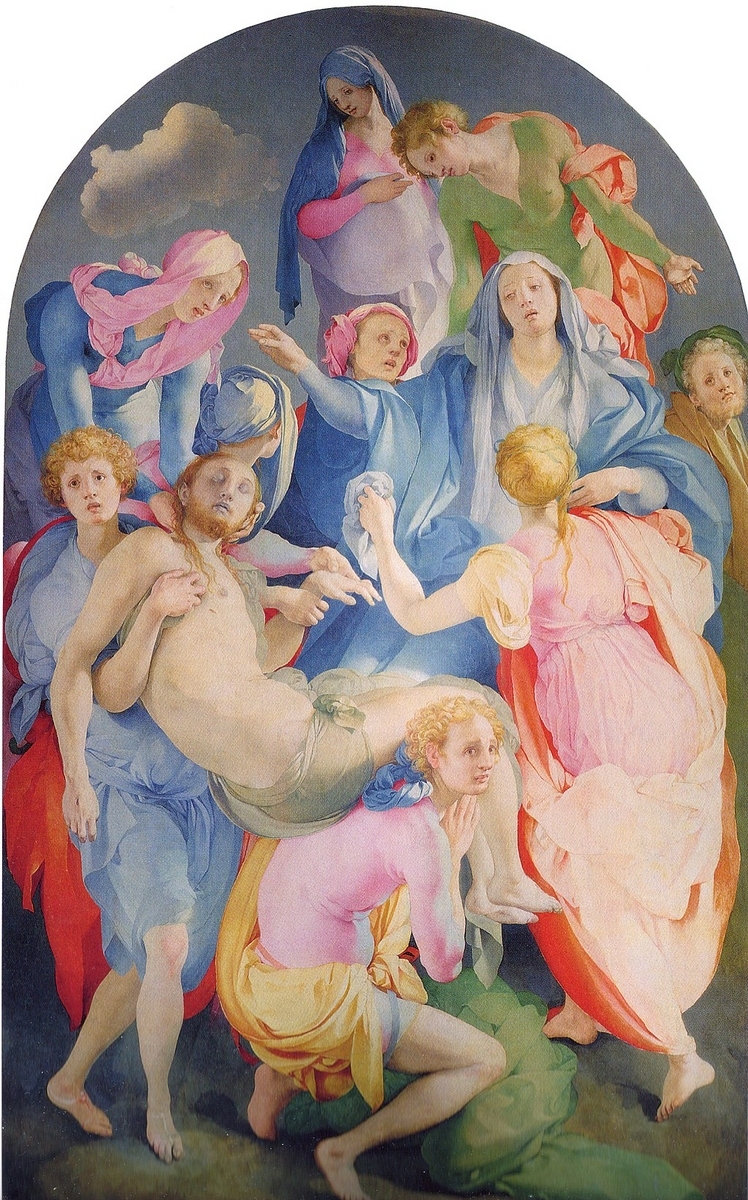
- ヤコポ・ダ・ポントルモ「十字架降下」:パステルカラー風の色彩と複雑な構図が特徴的です。
Jacopo da Pontormo's "Deposition from the Cross": Characterized by pastel-like colors and complex composition.
- パルミジャニーノ「長い首の聖母」:聖母マリアの首が極端に引き伸ばされ、非現実的な印象を与えます。
Parmigianino's "Madonna with the Long Neck": The Virgin Mary's neck is extremely elongated, giving an unrealistic impression.

- ブロンズィーノ「ウェヌスとクピドとの寓意」:複雑な寓意的主題と冷たい色調が印象的です。
Bronzino's "An Allegory with Venus and Cupid": Impressive for its complex allegorical theme and cold color tones.

- エル・グレコ「オルガス伯の埋葬」:歪んだ人体表現と幻想的な空間構成が特徴です。
El Greco's "The Burial of the Count of Orgaz": Characterized by distorted human figures and fantastical spatial composition.

- アルチンボルド「ウェルトゥムヌスとしての皇帝ルドルフ2世像」:果物や野菜で人物を描く奇抜な表現が目を引きます。
Arcimboldo's "Vertumnus (Portrait of Rudolf II)": Striking for its bizarre expression of portraying a person with fruits and vegetables.

果物と野菜が織りなす幻想「ウェルトゥムヌスとしての皇帝ルドルフ2世像」A Fantasy Woven by Fruits and Vegetables "Vertumnus (Portrait of Rudolf II)"
ここでは、マニエリスムの特徴を最も端的に表現している作品の一つ、ジュゼッペ・アルチンボルドの「ウェルトゥムヌスとしての皇帝ルドルフ2世像」を詳しく見ていきましょう。
Let's take a closer look at one of the works that most succinctly expresses the characteristics of Mannerism, Giuseppe Arcimboldo's "Vertumnus (Portrait of Rudolf II)."
この作品は、神聖ローマ皇帝ルドルフ2世を古代ローマの農業と季節の神ウェルトゥムヌスとして描いたものです。
This work depicts Holy Roman Emperor Rudolf II as Vertumnus, the ancient Roman god of agriculture and seasons.
しかし、一見しただけではそれと分かりません。
However, this is not apparent at first glance.
なぜなら、この肖像画は果物や野菜、花などの自然物で構成されているからです。
This is because the portrait is composed of natural objects such as fruits, vegetables, and flowers.
顔の各部分は様々な果物や野菜で表現されています。
Each part of the face is expressed with various fruits and vegetables.
例えば、鼻は梨、頬はリンゴや桃、口はチェリー、髭は麦の穂などです。
For example, the nose is a pear, the cheeks are apples and peaches, the mouth is cherries, and the beard is ears of wheat.
頭部は葉や花で覆われ、体も同様に果物や野菜で構成されています。
The head is covered with leaves and flowers, and the body is similarly composed of fruits and vegetables.
この奇抜な表現方法は、マニエリスムの特徴である現実からの逸脱を如実に示しています。
This bizarre method of expression vividly demonstrates the deviation from reality characteristic of Mannerism.
同時に、細部まで緻密に描かれた果物や野菜は、アルチンボルドの卓越した技術を誇示しています。
At the same time, the meticulously detailed fruits and vegetables showcase Arcimboldo's exceptional technique.
また、皇帝をウェルトゥムヌスとして描くことで、彼の統治力や自然との調和を寓意的に表現しています。
Moreover, by depicting the emperor as Vertumnus, it allegorically expresses his governance and harmony with nature.
この複雑な寓意と技巧の誇示は、まさにマニエリスムの真髄と言えるでしょう。
This complex allegory and display of technique can be said to be the essence of Mannerism.
後世への影響と現代的評価Influence on Later Generations and Modern Evaluation
マニエリスムは、その後のバロック美術に大きな影響を与えました。
Mannerism had a significant influence on later Baroque art.
バロック美術の劇的な表現や動きのある構図は、マニエリスムの影響を受けています。
The dramatic expressions and dynamic compositions of Baroque art were influenced by Mannerism.
また、20世紀になってからマニエリスムは再評価され、現代では重要な芸術様式として認識されています。
Mannerism was also re-evaluated in the 20th century and is now recognized as an important artistic style.
特に、その非現実的で幻想的な表現は、シュルレアリスムなどの近現代美術にも影響を与えたと考えられています。
In particular, its unrealistic and fantastical expressions are thought to have influenced modern and contemporary art movements such as Surrealism.
調和の崩壊が生んだ新たな美の探求The Pursuit of New Beauty Born from the Collapse of Harmony
マニエリスムは、社会的・精神的混沌の中で生まれた独自の芸術様式でした。
Mannerism was a unique artistic style born in the midst of social and spiritual chaos.
ルネサンスの調和と均衡を意図的に崩すことで、新しい美的表現を追求したのです。
By intentionally breaking the harmony and balance of the Renaissance, it pursued new aesthetic expressions.
非現実的な色彩、歪んだ人体表現、複雑な構図など、マニエリスムの特徴は一見すると奇異に感じられるかもしれません。
The characteristics of Mannerism - unrealistic colors, distorted human figures, complex compositions - may seem strange at first glance.
しかし、それは当時の芸術家たちが、既存の枠組みを超えて新たな表現を模索した結果なのです。
However, they are the result of artists of the time seeking new expressions beyond existing frameworks.
マニエリスムは、芸術における「美」の概念を大きく拡張しました。
Mannerism greatly expanded the concept of "beauty" in art.
それは単なる自然の模倣ではなく、芸術家の内面や想像力を反映したものでもありうるという可能性を示したのです。
It demonstrated the possibility that art could reflect not just the imitation of nature, but also the artist's inner world and imagination.
この時代の作品を鑑賞する際は、その奇抜な表現の背後にある芸術家たちの挑戦精神や、時代の空気を感じ取ってみてはいかがでしょうか。
When appreciating works from this period, why not try to sense the challenging spirit of the artists and the atmosphere of the times behind these bizarre expressions?
きっと、新たな美の発見があるはずです。
Surely, you will discover a new kind of beauty.
北方ルネサンス「緻密な写実と信仰の変革が織りなす芸術革命」(Northern Renaissance "The Artistic Revolution Woven by Meticulous Realism and Transforming Faith")
概要Overview
北方ルネサンスは、15世紀から16世紀にかけてネーデルラントを中心に発展した芸術運動です。
The Northern Renaissance was an artistic movement that developed primarily in the Netherlands from the 15th to 16th centuries.
油彩画の完成と緻密な写実表現が特徴で、宗教画や日常生活の描写に新たな次元をもたらしました。
Characterized by the perfection of oil painting techniques and detailed realistic expression, it brought a new dimension to religious paintings and depictions of daily life.
この記事では、北方ルネサンスの技法的革新、代表的な画家と作品、そしてイタリアルネサンスとの違いについて解説します。
This article explains the technical innovations of the Northern Renaissance, representative painters and their works, and the differences from the Italian Renaissance.
顕微鏡的精密さと信仰の融合The Fusion of Microscopic Precision and Faith
北方ルネサンスは、まるで顕微鏡を通して見たかのような緻密な描写と、油彩技法の革新によって特徴づけられる芸術運動です。
The Northern Renaissance is characterized by meticulously detailed depictions, as if viewed through a microscope, and innovations in oil painting techniques.
15世紀初頭から16世紀半ばにかけて、主にネーデルラント(現在のオランダ、ベルギー周辺)で花開き、やがてドイツ、フランス、イングランドへと広がっていきました。
This artistic movement blossomed mainly in the Netherlands (present-day Holland and Belgium) from the early 15th to mid-16th centuries, eventually spreading to Germany, France, and England.
商業の発展と信仰の変革Commercial Development and Religious Transformation
この時代、ネーデルラントは商業と毛織物産業の発展により経済的に繁栄していました。
During this period, the Netherlands was experiencing economic prosperity due to the development of commerce and the wool industry.
活版印刷技術の発明は、知識の普及を加速させ、芸術家たちに新たなインスピレーションをもたらしました。
The invention of the printing press accelerated the spread of knowledge, inspiring artists with new ideas.
さらに、宗教改革の波が押し寄せ、伝統的なカトリックの価値観に疑問が投げかけられるようになりました。
Furthermore, the wave of the Reformation challenged traditional Catholic values.
人文主義思想の浸透も相まって、芸術表現に大きな変革をもたらしたのです。
Combined with the permeation of humanist thought, this brought about significant changes in artistic expression.
細密な写実と精神性の融合The Fusion of Detailed Realism and Spirituality
北方ルネサンスの最大の特徴は、驚くほど緻密な写実的描写にあります。
The most prominent feature of the Northern Renaissance is its astonishingly detailed realistic depiction.
油彩画技法の完成により、画家たちは細部まで精密に描き込むことが可能になりました。
The perfection of oil painting techniques allowed artists to paint intricate details with precision.
同時に、宗教画と世俗的主題の融合が進み、日常生活の中に神聖な要素を見出す独特の表現が生まれました。
Simultaneously, there was a fusion of religious paintings and secular themes, giving rise to unique expressions that found sacred elements in everyday life.
光と質感の繊細な表現も、北方ルネサンスの大きな特徴です。
The delicate expression of light and texture is also a major characteristic of the Northern Renaissance.
初期フランドル派から北方ルネサンスへFrom Early Netherlandish Painting to the Northern Renaissance
北方ルネサンスの基盤を築いたのが、15世紀前半に活躍した初期フランドル派です。
The Early Netherlandish painters, active in the first half of the 15th century, laid the foundation for the Northern Renaissance.
ヤン・ファン・エイクやロヒール・ファン・デル・ウェイデンらが、油彩画の技法を完成させ、緻密な描写を可能にしました。
Artists like Jan van Eyck and Rogier van der Weyden perfected oil painting techniques, enabling meticulous depiction.
初期フランドル派は主に宗教画を中心としていましたが、北方ルネサンスではテーマが多様化し、風景画や日常生活の描写が増えていきました。
While Early Netherlandish painting primarily focused on religious themes, the Northern Renaissance diversified its subjects, increasing the depiction of landscapes and daily life.
また、宗教改革の影響を受け、プロテスタントの新しいパトロン層が登場し、宗教的テーマにも変化が見られるようになりました。
Moreover, influenced by the Reformation, new Protestant patrons emerged, bringing changes to religious themes.
光輝く傑作たちRadiant Masterpieces
- ヤン・ファン・エイク「アルノルフィーニ夫妻像」(1434年):細密な描写と象徴的要素の融合
Jan van Eyck "The Arnolfini Portrait" (1434): A fusion of detailed depiction and symbolic elements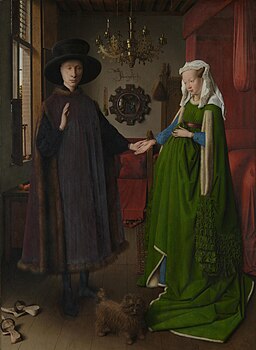
- ヤン・ファン・エイク「ヘントの祭壇画」(1432年):壮大な規模と精緻な細部描写の集大成
Jan van Eyck "Ghent Altarpiece" (1432): A culmination of grand scale and intricate detail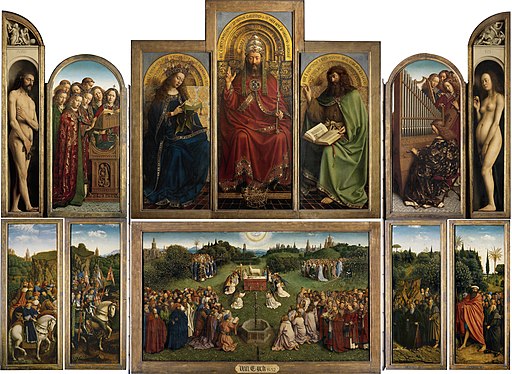
- ロヒール・ファン・デル・ウェイデン「十字架降下」(1435年頃):感情表現の豊かさと構図の革新性
Rogier van der Weyden "The Descent from the Cross" (c. 1435): Rich emotional expression and innovative composition

- アルブレヒト・デューラー「自画像」(1500年):北方とイタリアの様式を融合した傑作
Albrecht Dürer "Self-Portrait" (1500): A masterpiece fusing Northern and Italian styles


「受胎告知」に見る北方の精神The Northern Spirit in "The Annunciation"
ここでは、初期フランドル派の代表作であるヤン・ファン・エイクの「受胎告知」(1434-1436年頃)を詳しく見ていきましょう。
Let's take a closer look at Jan van Eyck's "The Annunciation" (c. 1434-1436), a representative work of Early Netherlandish painting.

この作品は、聖母マリアが大天使ガブリエルから受胎を告げられる場面を描いています。
This work depicts the scene where the Virgin Mary is informed of her conception by the Archangel Gabriel.
画面全体に満ちる柔らかな光、細密に描かれた室内の調度品、マリアの衣服の質感など、油彩技法の特徴が遺憾なく発揮されています。
The soft light permeating the entire canvas, the meticulously painted interior furnishings, and the texture of Mary's clothing all exemplify the characteristics of oil painting techniques.
特筆すべきは、宗教的な主題でありながら、当時のフランドルの市民の生活空間を背景としている点です。
Notably, despite its religious subject, the background is set in the living space of contemporary Flemish citizens.
これは、神聖なものと世俗的なものを融合させるという北方ルネサンスの特徴を如実に表しています。
This vividly represents the Northern Renaissance's characteristic of fusing the sacred and the secular.
また、窓から差し込む光は神の恩寵を象徴し、マリアの純潔を表す白百合や、聖霊を表す鳩など、象徴的な要素も多く取り入れられています。
Moreover, the light streaming through the window symbolizes divine grace, and symbolic elements like the white lily representing Mary's purity and the dove representing the Holy Spirit are incorporated.
この作品は、北方ルネサンスの技術的卓越性と精神性の融合を見事に体現しているのです。
This work perfectly embodies the technical excellence and spiritual fusion of the Northern Renaissance.
イタリアルネサンスとの違いDifferences from the Italian Renaissance
北方ルネサンスはイタリアルネサンスと同時期に発展しましたが、その特徴は大きく異なります。
While the Northern Renaissance developed concurrently with the Italian Renaissance, their characteristics differ significantly.
イタリアルネサンスが古典古代の復興を目指し、理想化された美を追求したのに対し、北方ルネサンスは現実世界の緻密な観察と描写に重点を置きました。
While the Italian Renaissance aimed to revive classical antiquity and pursued idealized beauty, the Northern Renaissance focused on meticulous observation and depiction of the real world.
イタリアルネサンスが遠近法や人体の理想的比例を重視したのに対し、北方ルネサンスは細部の精密な描写と象徴的な表現を追求しました。
The Italian Renaissance emphasized perspective and ideal human proportions, while the Northern Renaissance pursued precise depiction of details and symbolic expression.
また、イタリアルネサンスがフレスコ画を主な技法としたのに対し、北方ルネサンスは油彩画を発展させました。
Furthermore, while the Italian Renaissance primarily used fresco techniques, the Northern Renaissance developed oil painting.
写実の伝統と新たな表現The Tradition of Realism and New Expressions
北方ルネサンスの影響は、後世の美術に大きな影響を与えました。
The influence of the Northern Renaissance had a significant impact on later art.
油彩画の技法と細密描写の伝統は、バロック絵画やオランダ黄金時代の静物画にまで受け継がれています。
The tradition of oil painting techniques and detailed depiction was passed down to Baroque painting and still life paintings of the Dutch Golden Age.
特に、デューラーの作品は、イタリアルネサンスの影響を北方に伝える架け橋となり、南北の美術交流を促進しました。
Particularly, Dürer's works served as a bridge, bringing the influence of the Italian Renaissance to the North and promoting artistic exchange between North and South.
現代においても、北方ルネサンスの作品は、その技術的卓越性と精神的深遠さゆえに高く評価されています。
Even today, Northern Renaissance works are highly valued for their technical excellence and spiritual profundity.
写実的な描写力と象徴的な表現の融合は、現代美術にも大きな示唆を与えているのです。
The fusion of realistic depiction and symbolic expression continues to provide significant insights for contemporary art.
北方の光が照らす美術の新地平New Horizons in Art Illuminated by Northern Light
北方ルネサンスは、その独自の技法と表現によって西洋美術史に重要な足跡を残しました。
The Northern Renaissance left an important mark on Western art history with its unique techniques and expressions.
イタリアルネサンスとは異なるアプローチで現実世界を捉え、宗教と世俗の融合を図った点で、新たな芸術表現の地平を切り開いたと言えるでしょう。
It can be said to have opened up new horizons of artistic expression by capturing the real world with an approach different from the Italian Renaissance and fusing religion and the secular.
緻密な描写と深い精神性の融合は、人間の内面と外面の両方を探求するという、美術の本質的な役割を体現しています。
The fusion of meticulous depiction and deep spirituality embodies the essential role of art in exploring both the internal and external aspects of humanity.
初期フランドル派から始まり、宗教改革の影響を受けながら発展した北方ルネサンスの芸術は、現実世界の中に神聖なものを見出そうとする人間の永遠の探求を映し出しているのです。
The art of the Northern Renaissance, which began with Early Netherlandish painting and developed under the influence of the Reformation, reflects humanity's eternal quest to find the sacred within the real world.
ルネサンス「人間性と美の復興 - 芸術の黄金時代」(Renaissance "The Revival of Humanity and Beauty - The Golden Age of Art")
概要Overview
ルネサンスは、14世紀から16世紀にかけてイタリアを中心に花開いた芸術運動です。
The Renaissance was an artistic movement that flourished in Italy from the 14th to the 16th century.
この時代、古典文化の再評価と人間中心主義の台頭により、芸術表現に革命的な変化がもたらされました。
During this period, the re-evaluation of classical culture and the rise of humanism brought about revolutionary changes in artistic expression.
本記事では、ルネサンス美術の特徴、歴史的背景、代表作品、そしてその後世への影響について詳しく解説します。
This article will explore the characteristics of Renaissance art, its historical background, representative works, and its influence on subsequent generations.
芸術の革命的転換点A Revolutionary Turning Point in Art
ルネサンスは、「再生」を意味するフランス語に由来し、中世から近代への橋渡しとなった重要な文化運動です。
The Renaissance, derived from the French word meaning "rebirth," was a crucial cultural movement bridging the Middle Ages and the modern era.
この時代、芸術家たちは古典古代の文化を再評価し、人間中心の世界観を反映した作品を生み出しました。
During this time, artists reevaluated the culture of classical antiquity and created works reflecting a human-centered worldview.
ルネサンス美術の年代範囲は、14世紀初頭から16世紀末までの約300年間に及びます。
The Renaissance art period spans approximately 300 years, from the early 14th century to the late 16th century.
変革の時代を彩る芸術Art Adorning an Era of Change
ルネサンス期のイタリアでは、社会、政治、文化のあらゆる面で大きな変化が起こりました。
Italy during the Renaissance experienced significant changes in all aspects of society, politics, and culture.
教皇の影響力低下により、キリスト教の絶対的な支配力が弱まり、より自由な思想の表現が可能になりました。
The decline in papal influence weakened the absolute power of Christianity, allowing for freer expression of thought.
東方との貿易で富を得た商人や銀行家が、新たな芸術のパトロンとして台頭し、芸術家たちに創作の機会を与えました。
Merchants and bankers who gained wealth through Eastern trade emerged as new patrons of the arts, providing artists with opportunities for creation.
古代ギリシャ・ローマ文化の再評価と流入により、新たな美的基準と知的探求の精神が生まれました。
The reevaluation and influx of ancient Greek and Roman culture gave birth to new aesthetic standards and a spirit of intellectual inquiry.
人文主義の台頭は、個人の価値と能力を重視する風潮を生み、芸術表現にも大きな影響を与えました。
The rise of humanism created a trend valuing individual worth and ability, greatly influencing artistic expression.
光と影が織りなす美の世界A World Woven by Light and Shadow
ルネサンス美術は、革新的な特徴によって西洋美術に新たな地平を切り開きました。
Renaissance art opened new horizons in Western art through its innovative characteristics.
写実性の向上は、遠近法や解剖学の知識を活用することで実現されました。
Enhanced realism was achieved through the use of perspective and anatomical knowledge.
これにより、より立体的で生命感あふれる表現が可能となり、人物や風景がより現実味を帯びて描かれるようになりました。
This allowed for more three-dimensional and lifelike expressions, with figures and landscapes depicted more realistically.
人間中心主義の台頭は、宗教画にも大きな影響を与え、神聖な存在よりも人間的な側面が強調されるようになりました。
The rise of humanism greatly influenced religious paintings, emphasizing human aspects over divine beings.
この変化は、聖母子像における幼子イエスの描写にも表れ、より自然で親しみやすい姿で表現されるようになりました。
This change was evident in the depiction of the infant Jesus in Madonna and Child paintings, portrayed in a more natural and approachable manner.
赤ん坊の描写は、純粋さや無垢さの象徴として重要な役割を果たし、人間性の本質を表現する要素となりました。
The portrayal of infants played a crucial role as a symbol of purity and innocence, becoming an element expressing the essence of humanity.
古典的美の追求は、理想的な人体比率や構図の研究となって表れました。
The pursuit of classical beauty manifested in the study of ideal body proportions and composition.
芸術家たちは、古代ギリシャ・ローマの美術を参考にしながら、調和の取れた美しさを追求しました。
Artists sought harmonious beauty, referencing ancient Greek and Roman art.
技術革新、特に油彩技法の確立は、より繊細で豊かな色彩表現を可能にし、作品に深みと立体感をもたらしました。
Technological innovations, especially the establishment of oil painting techniques, enabled more delicate and rich color expressions, bringing depth and dimensionality to the works.
感情表現の豊かさは、人物の表情や仕草を通じて内面の感情をより鮮明に表現することで達成されました。
The richness of emotional expression was achieved by more vividly expressing inner feelings through the facial expressions and gestures of the figures.
特に赤ん坊の表情や動きの描写は、解剖学的知識の発展により一層正確になり、作品に生命力と親密さをもたらしました。
Particularly in the depiction of infants, more accurate representations of expressions and movements, thanks to advancements in anatomical knowledge, brought vitality and intimacy to the works.
これらの特徴が相まって、ルネサンス美術は人間の尊厳と美の理想を追求し、時代を超えて私たちに深い感動を与え続けています。
These characteristics combined to create Renaissance art that pursued human dignity and ideals of beauty, continuing to deeply move us across time.
芸術家たちの探究心と技術の革新は、後世の美術に大きな影響を与え、現代においても高く評価される普遍的な価値を生み出したのです。
The artists' spirit of inquiry and technological innovations have had a significant influence on later art, producing universally valued works still highly regarded today.
巨匠たちが残した不朽の名作Immortal Masterpieces Left by the Great Masters
ルネサンス期には、数多くの傑作が生み出されました。
The Renaissance period produced numerous masterpieces.
代表的な作品には以下のようなものがあります。
Representative works include:
- レオナルド・ダ・ヴィンチ「最後の晩餐」:遠近法と心理描写の巧みさが際立つ名作
Leonardo da Vinci's "The Last Supper": A masterpiece notable for its skillful use of perspective and psychological portrayal
- ミケランジェロ「アダムの創造」:人間の尊厳と神との関係を象徴的に表現
Michelangelo's "The Creation of Adam": A symbolic expression of human dignity and the relationship with God
- ラファエロ「アテナイの学堂」:古代の哲学者たちを集めた壮大な群像画
Raphael's "The School of Athens": A grand group portrait gathering ancient philosophers
- ボッティチェリ「ヴィーナスの誕生」:神話的主題と優美な線描が特徴的
Botticelli's "The Birth of Venus": Characterized by mythological themes and graceful lines
_-_The_Last_Supper_(1495-1498).jpg)


人間性の輝きを映し出す鏡A Mirror Reflecting the Radiance of Humanity
レオナルド・ダ・ヴィンチの「モナ・リザ」は、ルネサンス美術の真髄を示す作品として知られています。
Leonardo da Vinci's "Mona Lisa" is known as a work epitomizing Renaissance art.
この肖像画は、1503年頃から1506年頃にかけて制作されたと考えられています。
This portrait is believed to have been created between 1503 and 1506.
「モナ・リザ」の特徴は、その神秘的な微笑みと、背景と人物の融合にあります。
The "Mona Lisa" is characterized by its mysterious smile and the fusion of the figure with the background.
ダ・ヴィンチは、スフマート技法を用いて輪郭線をぼかし、光と影の微妙な変化を表現しました。
Da Vinci used the sfumato technique to blur outlines and express subtle changes in light and shadow.
これにより、モデルの表情に生命感が宿り、見る角度によって表情が変化して見える効果が生まれました。
This gave life to the model's expression, creating an effect where the expression seems to change depending on the viewing angle.
また、背景の風景と人物の配置にも遠近法が巧みに用いられ、空間の奥行きが表現されています。
Perspective is also skillfully used in the placement of the background landscape and the figure, expressing spatial depth.
「モナ・リザ」は、単なる肖像画を超えて、人間の内面性と自然との調和を表現した作品として、ルネサンス精神を体現しています。
The "Mona Lisa" embodies the Renaissance spirit as a work that expresses the inner nature of humans and harmony with nature, transcending mere portraiture.
芸術の新たな地平線を切り開くOpening New Horizons in Art
ルネサンス美術は、その後の西洋美術の発展に多大な影響を与えました。
Renaissance art had a profound influence on the development of subsequent Western art.
写実的な表現技法や人間中心の主題は、バロック様式やマニエリスムなど、後続の芸術運動に引き継がれていきました。
Realistic expression techniques and human-centered themes were inherited by later art movements such as Baroque and Mannerism.
遠近法や解剖学的知識に基づく人体表現は、現代美術においても重要な基礎となっています。
Body expressions based on perspective and anatomical knowledge continue to be important foundations in contemporary art.
ルネサンス期の芸術家たちが示した多才な才能と探究心は、現代のアーティストたちにも刺激を与え続けています。
The versatile talents and spirit of inquiry demonstrated by Renaissance artists continue to inspire contemporary artists.
現代においても、ルネサンス美術は人間性の探求と美の追求の象徴として、高く評価されています。
Even today, Renaissance art is highly valued as a symbol of the exploration of humanity and the pursuit of beauty.
人間性と美の永遠の探求The Eternal Pursuit of Humanity and Beauty
ルネサンス美術は、古典文化の再評価と人間性の復興を通じて、西洋美術に革命的な変化をもたらしました。
Renaissance art brought revolutionary changes to Western art through the reevaluation of classical culture and the revival of humanity.
写実性の向上、人間中心主義、古典的美の追求などの特徴は、その後の美術の発展に大きな影響を与え、現代にも通じる普遍的な価値を持っています。
Characteristics such as enhanced realism, humanism, and the pursuit of classical beauty have greatly influenced the development of subsequent art and hold universal value relevant even today.
赤ん坊の描写に見られるように、人間の本質や生命の神秘を探求する姿勢は、ルネサンス芸術の重要な側面でした。
As seen in the depiction of infants, the attitude of exploring the essence of humanity and the mystery of life was an important aspect of Renaissance art.
ルネサンスの芸術家たちが追求した人間の尊厳と美の理想は、時代を超えて私たちに問いかけ続けています。
The ideals of human dignity and beauty pursued by Renaissance artists continue to question us across time.
彼らの作品は、人間の可能性と創造性の証として、今なお私たちを魅了し、インスピレーションを与え続けているのです。
Their works, as testament to human potential and creativity, continue to fascinate us and provide inspiration even now.
